How braces work
Braces move teeth with a gentle, steady push. Small brackets are fixed to the teeth and a thin wire runs through them. The wire is shaped as an ideal arch, and as it slowly tries to return to that shape, it carries the teeth with it.
Teeth can move because the bone around their roots slowly reshapes under light pressure. That is why treatment takes months rather than weeks, and why the force is kept gentle.
Who are braces for?
- Crowded or crooked teeth, which are also harder to keep clean.
- Gaps between teeth.
- Bite problems, such as top teeth that stick out far ahead of the bottom ones, or teeth that do not meet properly.
- Getting the mouth ready for other treatment, for example making room for an implant or a crown.
Braces are most often fitted in the teenage years, but adults can have them too, as long as the teeth and gums are healthy.
What to expect
- Consultation. The orthodontist examines your teeth and bite, and usually takes X-rays, photos and moulds or scans to plan the treatment.
- Fitting. The brackets are bonded to the teeth and the first wire is put in. It does not need an injection. Teeth often feel sore for a few days.
- Adjustments. You come back every few weeks, often every four to eight, so the wire can be changed or tightened.
- Removal and retainers. When the teeth are in place, the braces come off. A retainer, either removable or a thin wire glued behind the teeth, keeps them from drifting back.
Treatment usually takes between one and two years, sometimes less for small changes and longer for complex ones. The orthodontist will give you an estimate after planning.
Living with braces
- Brush carefully around every bracket, and use small interdental brushes under the wire.
- Avoid very hard or sticky food, such as hard sweets, chikki, ice and chewing gum, which can break brackets.
- If a bracket comes loose or a wire pokes, call or WhatsApp the clinic. Orthodontic wax over the sharp spot helps until you are seen.
Your dentist
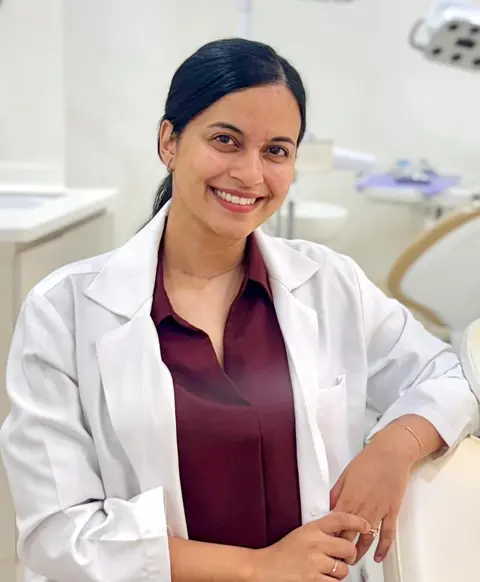
Dr. Laura Albuquerque
Braces at the clinic are fitted and adjusted by a visiting orthodontist, a dentist who specialises in moving teeth. Dr. Laura looks after the rest of your dental care alongside them, and can plan any crowns, bridges or implants that your new bite needs.
Common questions
Do braces hurt?
Fitting them does not hurt, but teeth usually ache for a few days after fitting and after each adjustment. Soft food and ordinary painkillers help. Brackets can rub the cheeks at first; wax helps while you get used to them.
How much do braces cost in Goa?
It depends on how much the teeth need to move, how long treatment will take and which type of braces suit you. The orthodontist will explain the plan and its cost at your consultation, before treatment starts.
Am I too old for braces?
No. Adults can have braces as long as their teeth and gums are healthy. Any gum disease is treated first.
Can I have braces if I only visit Goa once or twice a year?
Braces need an adjustment visit every few weeks, so they are best suited to people who live in or near Goa for the whole treatment. If you live abroad, ask about this before you start.
Do I need to wear a retainer?
Yes. Teeth tend to drift back after braces come off, especially in the first year. Wearing your retainer as advised keeps the result.
This page gives general information, not advice for your own teeth. Dr. Laura will explain what suits you, and what it will cost, after examining you.